Thứ Bảy, 1 tháng 9, 2012

Magpie Goose


The Life of Animals | Magpie Goose | Magpie geese are unmistakable birds with their black and white plumage and yellow legs. T The males are larger than females. Related and existing families, Anhimidae (Schreier) and Anatidae (ducks, geese and swans), contain all other taxa. The Magpie Goose included in the genus and family Anseranas Anseranatidae the monotypic in our time A cladistic study determined the morphology of waterfowl that the Magpie Goose was an early and distinctive offshoot, according to various screamers and all other ducks, geese and swans. This family is pretty old, a living fossil, the set appeared before the Cretaceous-Tertiary extinction relative lived Vegavis IAAI ago 68-67000000 years.


Considered other Paleogene birds sometimes as magpie geese families of Geranopsis Hordwell formation are late Eocene to early Oligocene of England and Anserpica from the Late Oligocene of Billy Crechy (France). The earliest known member of the group is represented in Australia found an unnamed species of fossils in the late Oligocene Carl Creek Limestone of Queensland. The Australian distribution of the species is well adapted to the presumed Gondwana origin Anseriformes, but Northern Hemisphere fossils are enigmatic. Perhaps the magpie geese were one of the dominant groups Paleogene waterfowl, are largely extinct later. The Magpie Goose is found in a large number of open wetlands such as floodplains and swamps.


The area even as far south as the Coorong and the wetlands of south-east of South Australia and Western Victoria expanded. The species is the subject of reintroduction projects as Bool Lagoon between Penola and Naracoorte. In Victoria, the Magpie Goose listed as near threatened on the 2007 advisory list of threatened vertebrate animals in Victoria. In December 2007 the Flora and Fauna Guarantee Act list of threatened fauna, it is also called.


Find The Life of Animals

Southern Screamer


The Life of Animals | Southern Screamer | Southern Screamer averages 81-95 cm (32-37 inches) and weighs 5.3 kg (6.6 to 11 pounds). Standard measures, the wing chord of 54 cm (21 inches), the tail 23.2 cm (9.1 inches), height 4.5 cm (1.8 in.) and 11 cm pile (4, 3). It lives in swamps tropical and sub-tropical estuaries and coasts. The Southern Screamer is a good swimmer, with partially webbed, but would prefer to move on the ground.


Lives in large flocks, feeding on the ground in meadows and fields to the breeding season, when the birds couples The Southern Screamer sets monogamous relationships that last the lifetime is estimated at 15 years. The pair share incubation, which lasts 43-46 days.


Find The Life of Animals

Thứ Sáu, 31 tháng 8, 2012

Australia Brush Turkey

  
The Life of Animals | Australia Brush Turkey | This is a spectacular large bird with black feathers and a red head. The The subspecies A. l. purpureicollis northern Cape York Peninsula is smaller than the most widespread nominate subspecies. Acacia male is much higher during the breeding season, often swinging from side to side as they run. Male heads and wattles also much brighter during the breeding and nesting. Brush the turkey flies very clumsily with heavy blows when it is scared and rusting in trees at night and the heat of the day.


Brushturkeys are common birds, and have communal nests. A typically consists of a dominant male, one or more young males and several females. They build large nests on the ground, made of leaves and other combustible materials from the earth, from 1 to 1.5 meters high and 4 meters in diameter. The eggs are hatched by the heat of the composting mound which normally only men who regulate the temperature by adding or removing material in an attempt to keep the temperature of the hill in the range of 33-35 ° C to maintain incubation. The Australian Brush Turkey controls the temperature by stabbing its beak into the hill.


The average clutch of eggs is between 16 and 24 large white eggs, which are scheduled from September to March. Brush-turkey eggs are a favorite food of lizards, snakes, dingoes and dogs, and were once a staple of Indigenous Australians. Often goannas exhibit wounds on their tails are pecked by Brush-turkey wildly from their nests. They feed on small animals. The Australian Brush-turkey inhabits rainforests and sclerophyll forests, but can also be found in dry areas scrubs.


Brush-turkey feed on insects, seeds and fallen fruits, which are exposed by raking the leaves or breaking open rotten logs with their large feet. Most of the food derived from the soil, from time to time with birds observed feeding mature fruit trees. The Australian Brush-turkey can sometimes damage gardens by raking the soil in search of food.
Find The Life of Animals

Thứ Tư, 29 tháng 8, 2012

Hogfish


The Life of Animals | Hogfish | The parrot is characterized by a great form of laterally compressed body. IInterestingly so long "pig-like" face and rooting behavior of Hogfish is named. The caudal tail semilunar or slightly 'and the pectoral fins are along the sides of the body with the pelvic fins coupled directly below. A prominent black behind the pectoral fins differentiates males from females.


The parrot is a hermaphrodite "first woman" hermaphrodite. Davis (1976) Women and young people often begin as a light gray, brown or reddish brown with a lighter side, no different color models. Males are intended for color and have a deep dark stripe running from the snout to first dorsal spine and the black side angle behind the pectoral fins.


Even Hogfish social groups are organized into harems in which a male and protect a group of women in their territory. Hogfish is an important recreational species. In 2007, Florida Hogfish landings amounted to 306,953 pounds. Fish populations are regulated by the government of South Atlantic Fisheries Council and Commissions Florida Fish and Wildlife Service. 


Find The Life of Animals

Thứ Hai, 27 tháng 8, 2012

Clown Triggerfish


The Life of Animals | Clown Triggerfish | The clown triggerfish, usually around coral reefs. He lives in the coastal plain to the outer reef habitats. This fish has a unique tsvet.Ventralnoy surface has large, white spots on a dark background, and its dorsal surface has black spots on yellow. There is a vertical, white (yellow) stripe on the tail plavnike.Yarko yellow mouth can be used to deter potential enemies. This fish has a form of camouflage, he counters or similar shading.

From the top of the fish will blend in more with the coral reef environment. Thanks to its attractive colors, this fish is one of the most valuable aquarium fish, like many other triggerfish, it may require a large aquarium and aggressive toward other fish. It should not be a small fish.


Find The Life of Animals

Chủ Nhật, 26 tháng 8, 2012

Finnish Spitz


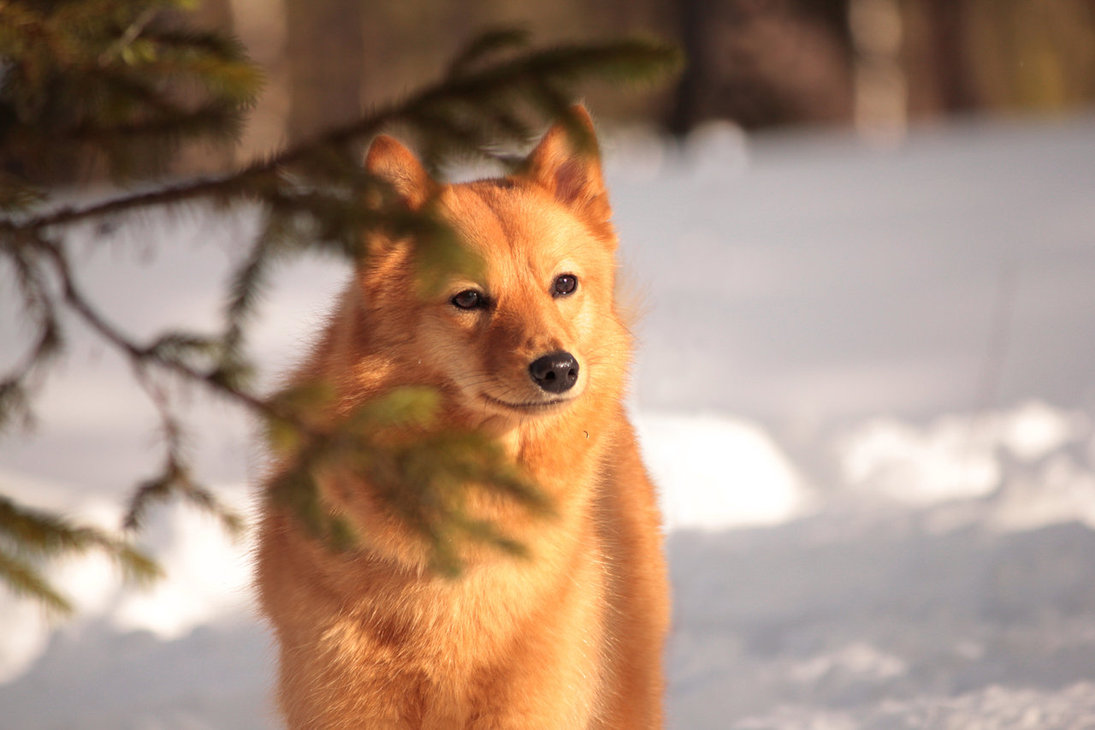
The Life of Animals | Finnish Spitz | Finnish Spitz of selectively bred Spitz type dogs that inhabited central Russia has developed several thousand years ago. This small clans foresters rely on their dogs to help them get food and excellent hunting skills of the Finnish Spitz made it a popular choice. By 1880, therefore, collected modern means of different people and their dogs, Finnish spitz crossed with other breeds of dogs, and were threatened with extinction as a distinct breed. Around the same time, the Finnish athlete from Helsinki named Hugo Roos observed pure native Finnish Spitz in the hunt in the northern forests. He is recognized by many virtues purely Finnish Spitz breed dogs and decided to examples of genuine Finnish Spitz were unpainted, to try to choose a race again. Thirty years of careful breeding has resulted in a modern Finnish spitz, dogs are descendants of the original stock of your foundation. Finnish Spitz resembles a fox.


Both sexes should appear slightly longer legs than the back. If there are nails, they must be removed. Front dewclaws may be removed, but they usually do not because they are generally low Finnish Spitz has a typical double layer, which consists of a soft, dense undercoat and a long, hard outer shell, which can measure 2.1 inches (2.5 to 5 cm) in length. The coat should be on the neck, back, back, thighs and tail tail, shorter on the head and legs harder, thicker and longer. Men should sport a bit longer and rougher than the women's coat, which have a little bit of fine wool. Long hair feathered tail without a dog food can look untidy. Most Finnish Spitz have preferred side, and it's not right.


Finnish Spitz blows coat or loses undercoat twice a year. While the dog may look free and full, excess undercoat serious skin problems. Some participants choose to dogs with excess undercoat to show dog hair appear lush. Yellowish-brown puppy or with more white breast is not preferred for show purposes. Color adult dog can be assessed experienced breeder at birth, but then, the color may change slightly as the puppy grows. Adult color is usually golden-red color. Coat. A small white spot, no more than 0.6 inches (1.5 cm) in width, is allowed on the chest and white tips on the legs is acceptable, but not desirable. This breed is active, alert and alive.


Like all dogs, small children and dogs should always be supervised when they are together. Finnish Spitz, and protective, dominant males have more opportunities than in females Most Finnish Spitz get along well with other dogs in the house. Barking is an important part of their hunt. In Finland, these dogs are valued for their barking abilities short, sharp bark is rich in many barks per minute, that sounds like a yodel. Finnish Spitz can bark as much as 160 times a minute. When used as a hunting companion, barking, to signal to the hunter, the dog prey in the forest. They can be trained to reduce the amount of barking, barking, even though it has excellent guard dogs. Finnish Spitz, independent, strong-willed, intelligent dog. This breed is not very hard training methods. 


Find The Life of Animals

Thứ Sáu, 24 tháng 8, 2012

Acanthurus Spot


The Life of Animals | Acanthurus Spot | Despite the body of reef fish in the shade can vary from light to dark blue, are the dorsal, anal and caudal fins are blue gold. As a teenager, the edges are on the dorsal and anal fins and the rings around the eyes violet-blue, blue or blue-green. Blue Tangs are very common in Belize and San Pedro features. Atlantic Blue Tang clings to commercial fishing, but has little relevance Caribbean industry.


Fish is a low value, type a sharp stench. Ciguatera can occur when meat potreblyaetsya.Vzrosly fish tail spine sharply, and only when the fish is experiencing some form of anxiety. Some species of the genus Acanthurus even thought have poison glands on their tail fin spines


Find The Life of Animals