Hiển thị các bài đăng có nhãn Aves. Hiển thị tất cả bài đăng

Thứ Hai, 6 tháng 8, 2012

Adelie Penguins


The Life of Animals | Adelie Penguins | There are 38 colonies of Adelie penguins, and more than 5 million Adélie in the Ross Sea region. Ross Island supports a colony of about half a million Adelie penguins. Adelie penguins breed from October to February, on the coast around the Antarctic continent. Adelie nests built of rough stones. Adelie penguins live in groups called colonies. These penguins are medium in size and weight of 46-75 cm (18-30 inches) long and 3.6 to 6 kg (7.9 to 13 pounds). The tail is a "little more than penguins queues. I am a bit "lower than other penguin species. His appearance is closer to the stereotypical image of penguins, like most black with a white belly. Adelie penguins can swim up to 45 mph (72 km / h) Adelie penguins are leopard seals prey, Skua and whales occasionally fatal.


Like all penguins, the Adelie highly social, feeding and nesting of groups. They are also very aggressive to other penguins who steal stones from their nest. Cherry-Garrard, said: "They are extraordinarily like children, of these people around the world, Antarctica, either as children or old men, full of self-importance. E 'was observed as the Penguin intrigue could put them in danger, Scott found a particularly troublesome The big problem with dog teams is due to the reckless behavior of penguins. These groups were jumping constantly in our iceberg. Since landing on your feet the whole attitude expressed devouring curiosity and a head of pork contempt for his own safety.


to the South Pole has been more receptive to this element of intrigue to Adelia Cherry-Garrard Meares and Dimitri-exercised dogs dog teams on the counter over, when we were stopped for a period of time. For stubborn personality characteristics Cherry-Garrard kept the bird in high esteemThe restriction of competition from these predators led to a surplus of krill, the penguins now used as a source of penguins fooddélie easier to reach their breeding grounds in October or November, in late winter and early spring. Nests consist of stones stacked.


In December, the warmest month in Antarctica (about -2 ° C or 28 ° F), parents take turns incubating the eggs, you'll eat and the other stays to warm the egg. The parent who is incubating does not eat. In March, young adults and their return to the sea. The Adelie penguin living on sea ice, but needs the ice-free land to breed. With the reduction of sea ice and food shortages, the population of Adelie penguins fell 65% in the last 25 years. Adelie penguins youth who have no experience in social interaction can respond to fake stimuli as penguins gather to breed.  Due to the emergence of birds and relatively similar to human behavior, human observers have interpreted this behavior as sexual deviation anthropomorphic.
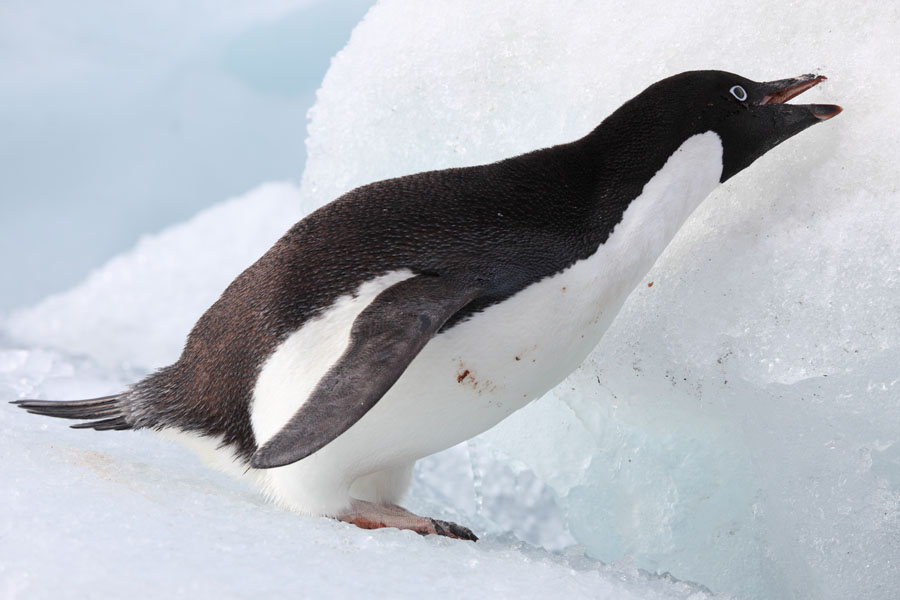

The brochure, declined for publication in the official reports of the Scott expedition, said the frequency of sexual activity, an auto-erotic behavior, and the apparently anomalous behavior of men and women, young couples, including necrophilia, sexual coercion, sexual abuse and physical chicks and homosexual behavior, "says an analysis by William Russell and his colleagues Douglas Sladen and David Ainley. Levick observe Adelie penguins at Cape Adare, the site of the largest colony of Adelie penguins in the world. The discovery significantly clarifies the behavior of the species that some researchers believe it is an indicator of climate change Adelie penguins live in the area of the Ross Sea, Antarctica and the migration of an average of about 13,000 kilometers (8,100 miles) during the year that follows the sun from their breeding colonies of winter feeding areas and vice versa versa. Longer trips were recorded at 17,600 km (10,900 miles)


Find The Life of Animals

Thứ Sáu, 6 tháng 7, 2012

Bald Eagle

  
The Life of Animals | Bald Eagle | The plumage of an adult Bald Eagle is evenly brown with a white head and tail. The tail is moderately long, slightly wedge-shaped. Males and females are identical in plumage color, but the sexual dimorphism is evident in species in which women are 25 percent larger than males. The mouthpiece is large and hook-shaped, with cerebral yellow. Immature eagles are distinct from the Golden Eagle in that the former has a more excellent head with a large beak, sharp straight wings held flat (not slightly raised) and a hit hardest, and the wing feathers that do not completely cover the legs. The Bald Eagle is sometimes considered the largest bird of prey is the case in North America (except California Condor possibly unrelated), although the species overlap in size with the races of the American Golden Eagle.


Females
are about 25 percent larger than males, with an average of 5.8 kg (13 lb) and against the male of average weight of 4.1 kg (9.0 lb). The eagles are larger than Alaska, where large females can weigh up to 7.5 kg (17 lb) and length 2.44 m (8.0 ft) across the wings. The call consists of weak chirping whistles, louder and more shrill from young birds than adults. The Bald Eagle prefers habitats near seacoasts, rivers, lakes, oceans and other large bodies of open water with abundant fish. The Bald Eagle requires old-growth stands and mature pine and hardwood trees for perching, roosting and nesting.


The Bald Eagle is extremely sensitive to human activity, and is most commonly found in areas free of human disturbance. It chooses sites more than 1.2 kilometers (0.75 miles) of the low density human disturbance and more than 1.8 kilometers (1.1 miles) of medium to high density human disturbance. Sometimes eagles will in large estuaries or woodlands isolated in large cities like hardtack Island in the Willamette River in Portland, Oregon or John Heinz National Wildlife Refuge at Tinicum in Philadelphia, Pennsylvania. Despite this sensitivity, a family of bald eagles moved to Harlem in New York in 2010 The Bald Eagle Natural Area covers most of North America, including the largest, Canada's all continental United States and northern Mexico. It is the only sea eagle endemic in North America.


Bald Eagles also in certain places in the winter. From November to February, two thousand birds winter in Squamish, British Columbia, halfway between Vancouver and Whistler. The birds primarily gather along the Squamish and Cheakamus Rivers, attracted by spawning salmon in the area. The bald eagle is a powerful insect, and increases the thermal convection currents. It reaches speeds of 56-70 mph (35-43 mph) when gliding and flapping, and about 48 kilometers per hour (30 mph) that fish. It is partly migratory species, depending on the location. The Bald Eagle selects migration routes which use thermal updrafts, and food sources. The bald eagle diet is opportunistic and varied, but in some areas they feed mainly on fish. Locally, eagles depend largely on carrion, especially in winter.


Mammalian prey includes rabbits, hares, raccoons, muskrats, beavers, deer and fawn. Birds occasionally be attacked in flight with prey, such as Canada geese captured and slain, while in the air. Long live prey are slightly smaller than the eagle, but predation was recorded for the animals to the size of adult swans, raccoons and young adult ungulates, which are heavier than the bald eagles. In the Chesapeake Bay, bald eagles are important enemies of raccoons. To hunt fish, easily their most important live prey, the eagle swoops down over the water and grab the fish out of water with its claws. Eagles have structures called spicules on their toes that allow them to seize the fish.  Eagles have powerful talons and are included to fly with a fawn deer Mule £ 15.


Eagles can fly fish at least equal to its weight, but if the fish is too heavy to lift, the eagle can be dragged into the water. You can swim to safety, but some eagles drown or succumb to hypothermia. By competing for food, eagles usually dominate other fish-eaters and scavengers, aggressively displacing mammals such as coyotes and foxes and birds such as crows, gulls, vultures and other raptors. Bald Eagles can be moved by you or golden eagles.  Occasionally, eagles steal fish and other prey away from smaller raptors such as ospreys, a practice known as kleptoparasitism. Healthy adults are not plagued eagles in nature and therefore are considered predators. In one case, an adult eagle investigating a nest prey Peregrine suffered a concussion of a pilgrim father swooping and eventually died a few days afterwards. Bald Eagles are sexually mature at four or five years old.


It is believed that eagles pairs for life. Eagle undergoes extensive courtship calls and flight displays. Nest is the largest of all birds in North America, which is used repeatedly over many years and new material added each year, eventually as large as four meters (13 feet) deep, 2 5 meters (8.2 meters) in diameter and weigh tons (1.1 short tons) of a nest in Florida was 6.1 meters (20 feet) deep 2.9 meters (9.5 feet) in diameter, and weighs 3 tons (2.7 T). This nest is on record as the largest nest tree has ever known. The nest is made of branches, usually in large trees near water. By producing, where there are no trees, the Bald Eagle will nest on the ground. Both male and female in turn incubating the eggs. Like the size, the average length of an eagle population appears to be influenced by the location, the bald eagle is the national bird of the United States. On 20 June 1782, the Continental Congress adopted the design is still present for the Great Seal of the United States, including an American eagle holding 13 arrows and a branch of olive leaves 13 with its claws. Contrary to popular legend, there is no evidence that Benjamin Franklin has always Wild Turkey, instead of the bald eagle as a symbol of the United States supported.
Find The Life of Animals

Thứ Tư, 4 tháng 7, 2012

Pallas Fish Eagle

  
The Life of Animals | Pallas Fish Eagle | It has a light brown tint with a white face. The wings are dark brown back and brown, darker below. The tail is black with a broad white fat. Juveniles are darker overall, with no band on the tail. Women at 2.1-3.7 kg (4.6 to 8.2 lbs), are slightly larger than the males, from 2 to 3.3 kg (4.4 to 7.3 lbs). Since all species is slightly heavier than the eagle, is one of the greatest performance ever measured weightlifting for a flying bird.


This species is most difficult to place the eagle. The cytochrome b mitochondrial DNA sequence data is not able to suggest a reliable phylogenetic space for the bottom of the sea-eagles. However, some data are derived from molecular data, and especially the morphology and biogeography: This species retains the ancestral eye dark, bill and claws of the first sea eagles, shared with the ancient tropical origin. It


Distribution indicates that this species has evolved quite independently of other lines of sea eagle, but molecular data suggest that caution is perhaps closest to the Holarctic species. Apparently, this species reached the current, mainly landlocked particular distribution among sea eagles as a result of the collision of the Indian plate with Eurasia.


Conservation of Pallas's eagle is vulnerable, with a population of about 2,500 to 10,000 remain. In India, the eagle as threatened by the spread of water hyacinth (Eichhornia spp.), Who spread through the lakes and find prey difficult.

Thứ Ba, 3 tháng 7, 2012

African Fish Eagle

  
The Life of Animals | African Fish Eagle | African Fish Eagle is a species placed in genus Haliaeetus (sea eagles). The African Fish Eagle closest relative appears to be critically endangered Madagascar Fish Eagle (H. vociferoides). As the pairs of sea eagles of all species, is composed of a white-headed species (African Fish Eagle) and a tan head. The scientific name is derived from Haliaeetus, New Latin for "sea eagle" (from ancient greek haliaetos), and vocifer genus name is derived from the original, so called by the French naturalist François Levaillant, which he called "the pure." African Fish Eagle is a large bird, and the female, 3.2-3.6 kg (7-8 lb) is larger than the males, at 2-2.5 kg (4.4 to 5.5 kg). Males have a wingspan of about 2 meters (6 feet), while females have a wingspan of 2.4 meters (8 feet).


Adults are very distinctive in appearance, with a mostly brown body and large, powerful, black wings. The eyes are dark brown. The feet have rough soles and are equipped with powerful claws to allow the eagle to grasp the slippery aquatic prey. Although this species subsists primarily on fish and  opportunistic and can take a wider variety of prey, waterfowl. The call, when more acute given by men, is a WEEE Hyo-Hyo-ah-ah-or HEEE heeah heeah. As the name suggests, African fish eagles are indigenous to sub-Saharan Africa, ranging over most of continental Africa south of the Sahara Desert.


African Fish Eagle is assumed to occur in many places around the Lake Victoria and other lakes that are located in central Africa, particularly in the Rift Valley lakes. African Fish Eagle is a generalist species, which requires only the open water with prey and a fairly good pole. African Fish Eagle is absent arid with little surface water. breeding season of African fish eagles is during the dry season, when water level is low. African fish eagles are believed to be monogamous Incubation lasts 42-45 days before hatching chicks.


African Fish Eagle feeds mainly on fish, which, to locate potential prey from a perch in a tree, will be descending on its prey and breaking of the waters, with its large claws claws. The eagle will then fly to his perch to eat the fish. Like other sea eagles, African Fish Eagle has structures called tiptoed spiricules to capture fish and other slippery prey. If the African fish eagle catching a fish over 1.8 kg (4 pounds), it will be too heavy to allow the eagle to get a lift, so that the fish rather than slipping on the surface of the water to reach the shore.  African Fish Eagle is known to steal other bird species (such as Goliath herons) capture. From time to time may also remove mammalian prey as badgers and monkeys.

White Bellied Sea Eagle


The Life of Animals | White Bellied Sea Eagle | White-belly sea eagle with white head, back and bottom, and a dark back, or gray-blue wings. In flight, the black feathers on the wings, as is easily seen when the bird is seen from below. The large, hooked beak leaden gray-blue with a darker tip, and the iris dark brown. Legs yellow or gray, with long claws blacks (claws). In contrast to the type of Aquila eagles, feathered legs. Females are slightly larger, 80-90 cm (32-36 inches) and 2.5-4.5 kg (5.5 to 10 kg). A 2004 study of 37 birds from Australia and Papua New Guinea (3 ° C to 50 ° C) found that birds can be sexed reliably by size, and birds from more southern latitudes was greater by north. There is no seasonal change in plumage. White-belly sea eagle model changes are poorly understood.


For the active flight, white belly sea eagle alternates strong deep wing beats with short planning period. Young white belly sea eagle in the first year, mostly brown, with shades of cream streaked feathers on the head area, neck, nape and rump. This species breeds from all over the six years. Australian naturalist David Fleay said that the challenge is one of the most famous calls and distant transport of Australian birds, in sharp contrast to the relatively peaceful applications of wedge-tailed eagle. Adult white belly sea eagles are evident and are unlikely to be confused with any other bird. Immature birds may be confused with a wedge-tailed eagle.

In India, the Egyptian vulture has white plumage, but smaller and whiter than the back and wings. White belly white-tailed sea eagle in flight, distinguishes it from other species of large eagles. In the Philippines, may be confused with the eagle of the Philippines, which is distinguished by its crest, immature white belly sea eagles resemble immature fish eagle gray, but can be identified by their lower parts more completely dark brown and the feathers of wings and wedge-shaped tail.


White-bellied Sea Eagle is out of Mumbai on a regular basis (sometimes in the north of Gujarat, in the past, Lakshadweep) east to India, Bangladesh and Sri Lanka in South Asia, across the coast south-east Asia, including Burma, Thailand, Malaysia, Indonesia, Indochina, and the main coastal islands of the Philippines and southern China, including Hong Kong, Hainan and Fuzhou, east through New Guinea and the Bismarck Archipelago, and Australia. Similarly, in South Australia, is the most common on the north coast of Kangaroo Island. White-bellied Sea Eagle is generally sedentary and territorial, although it can travel long distances. They have been recorded traveling along the river to hunt flying foxes (Pteropus).


White-bellied sea eagles are territorial, and some birds form permanent pairs that inhabit territories throughout the year, while others are nomadic. The species are monogamous, with a couple stays together until one bird dies, the surviving birds and then quickly look for a new partner. A child growing up in Cowell, South Australia has reported 3,000 km (1,800 miles) on Fraser Island in Queensland. Small groups of white-bellied sea eagles are sometimes collected if there is an abundant source of food, such as cage or fish offal on board. Much of the behavior of white belly Sea Eagle, particularly agriculture, is still poorly understood. The breeding season varies depending on where it was recorded in the dry season in the Trans-Fly region and the central province of Papua New Guinea, and from June to August in Australia. A pair of white-bellied sea eagle is a display capable of flight before copulation: diving, sliding, and chasing each other while talking aloud.


This behavior has been recorded as an aggressive display with a wedge-tailed eagle. White-bellied Sea Eagle is usually selects large trees or stands for artificial nests in a pair were recorded using a tower cable Tin Wan in Hong Kong. Each year, leading to repair in the nests to get progressively larger. Nests are usually located in the forks of large trees overlooking the water. Old nests of Wedge-tailed Eagle or Whistling kites were repaired and used. The rocks are also suitable nesting sites and nest on the islands are sometimes built on the ground. Breeding pairs, the male most active, from three to six weeks of construction or reconstruction of the nest to lay their eggs usually taken two opaque white, oval eggs.

Initially, the male brings food and feeding the chicks females, but the parents feed the chicks as they grow older. Although two eggs are laid, it is unusual for two young successfully reared tail (leaving the nest). An egg may be infertile, or the second chick could die in the nest. White-bellied Sea Eagle is listed as Least Concern on the IUCN. Field studies of Kangaroo Island in South Australia has shown that pairs nesting in areas with high levels of human intervention (as determined by the cancellation of high landscape and human activity) have lower rates of reproductive success.


In the Eyre Peninsula in South Australia, nests have been released, as human activities encroach on the territories of other countries, the eagles, clearing of trees suitable for nesting was seen to disappear in large part on the field, such as removal Casuarina equisetifolia is located near Visakhapatnam in Andhra Pradesh in India.  Also, they nest on the island Netrani, where they are interested in, firing torpedoes carried by the Indian Navy. Nearly 100 nests were observed on this island.

Sea Eagle

  
The Life of Animals | Sea Eagle | The Sea Eagle (also known as white-tailed eagle and the Erne, especially for white-tailed eagle) is a bird of prey of the genus Haliaeetus in the bird of prey family Accipitridae. Eagles vary in size from a fish eagle Sanford average of 2 to 2.7 kg for the massive Steller's sea eagle weighing up to 9 kg. To 6.9 kg, white-tailed eagle is the largest in Europe. Eagles can weigh up to 6.3 kg, making it the largest eagle native to North America.  Three pairs of obvious species: white-tailed eagles, bald eagles and white-bellied sea Sanford and Africa and Madagascar fish eagle Each consists of a white and brown and kind of head and tail are white in all adult eagle, except for Sanford, white-bellied, and Pallas.


The genus is present in the Middle Miocene (12-16 Ma) with confidence Its closest relatives are the eagles fishing in Ichthyophaga kind, very similar to a tropical Haliaeetus species. The origin of the eagles and eagles fishing, probably in the general area in the Bay of Bengal. During the Eocene / Oligocene, as the Indian subcontinent collided with Eurasia, slowly, this vast expanse of relatively shallow ocean, the initial divergence of March eagle seems to have resulted in four tropical (and subtropical Southern Hemisphere) species across the Indian Ocean today.


In 2005, studies have shown that the molecular paraphyletic genus and summarizes Ichthyophaga, different species in a group of temperate and tropical.

Thứ Tư, 13 tháng 6, 2012

Kakapo


The Life of Animals | Kakapo | Kakapo parrots large round male measures up to 60 cm (24 inches) and weighs from 2 to 4 kg (4-9 lb) at maturity. Kakapo can not fly, having short wings for their size and lack of pronounced keel bone (sternum) that anchors the flight muscles of other birds. Unlike other species of land birds, Kakapo can accumulate a large amount of body fat for energy storage, making it the heaviest parrot. At the top of the Kakapo have yellowish green moss, or mottled feathers are prohibited, black or dark gray-brown, stirring well with native vegetation. Belly, tail, neck and face mostly yellow, streaked with pale green, slightly mottled brown-gray. Kakapo has a few feathers notable person driving fine, owl like face, so that the first European settlers called the "owl parrot". Beak surrounded by thin mustaches, or "whiskers" that birds use to test the waters to navigate, as he walks with his head down. Kakapo feet are large, scaly, and, like all parrots, zygodactyl (two toes pointing forward and two steps back). End of the tail feathers are often worn by the constant slip on the ground.


A woman can be easily distinguished from that of men: he is the head narrower and less domed, its beak is narrow and proportionately more of its ceremonies and nostrils small feet and legs are thinner and pinkish gray, and its tail is proportionately larger. It seeks to confront more and more aggressive than men when treated. Like many parrots, Kakapo has a number of challenges. Kakapo is a well-developed sense of smell, which complements its nightlife. The smell is often warns predators Kakapo largely defenseless. It seems that the Kakapo and many species of birds of New Zealand has evolved to occupy an ecological niche, usually filled with various mammalian species (marine mammals not native to New Zealand, three species of bats small). Before the arrival of humans, Kakapo were distributed in all three main islands of New Zealand. Although the Kakapo can not fly, it is an excellent climber, climbing to the tops of tall trees. A woman, he made two trips back each night during the nesting season of its nest to a food source up to 1 km (0.6 miles), and men can walk the house scene of a range of coupling to 5 km (3 miles) during the breeding season (October-January).


Young birds have a fighting game and enter the neck of a bird is often the other under his chin. Kakapo is curious by nature and are known to interact with people. Conservation staff and volunteers engaged widely with some Kakapo, which have different personalities. Kakapo was a very successful species in pre-human New Zealand and one of the reasons for this have been a lot of accessories to effectively avoid predators of local birds of prey, which are their only predators in the past. All four species rose to head the search for prey in the day and avoid the birds of prey, whose ancestors camouflage uniform and Kakapo became night. Predatory mammals, unlike birds, rely on their sense of smell and hearing to find prey and often hunt at night. The usual way for people to track down the Kakapo is the liberation of trained dogs Kakapo is the only type of parrot fly around the world, and only flightless bird that has a lek breeding system. Men are free to assemble in the arena and compete with each other to attract females. Women listen to men, because they show, or "leks They choose a mate based on the quality of its display, if not pursued by men in any way to open a pair bond is formed. Males and females meet only to mate.


Men remain in their camp during the mating season. Fight against birds may leave injury or even kill them. Kakapo is a rare bird in the world that built its current bowls are often created alongside the rocks, banks or tree trunks, to reflect the sound of the bowl itself act as amplifiers for increase the projection of the growth in male mating calls. Each bowl man linked network of trails and paths, which can range from 50 meters (160 feet) along the ridge or 20 meters (60 feet) in diameter around the hill. Men clean their bowls, and traces of debris. To attract females, males emit a strong low frequency (below 100 Hz) calls booming Cup, enlargement of the bag. After a sequence of about 20 loud explosion, a man Kakapo radiates high frequencies, metallic "ching" sound. Men are growing at an average eight hours a day, every man can produce thousands of arrows at that time. Once a woman enters the yard of one of the men, male performs display, in which he sways from side to side and makes a clicking noise with his beak. Once the birds are mated, the woman returned to his home region to lay their eggs and raise chicks. The man continues to thrive in the hope of attracting another woman. Female Kakapo lay up to three eggs per breeding cycle.


The female incubates the eggs is true, but to leave every night in search of food. Kakapo eggs usually hatch within 30 days, with fluffy gray chicks that are totally helpless. Young chicks are vulnerable to predators, like an egg, and the young were killed, many of these predators that attack adults. The men begin to grow rapidly until about 5 years. Usually, women do not seek men, until they are between 9 and 11 years. Kakapo do not breed every year, and has one of the lowest rates of reproduction in birds. Mating occurs only in years when trees mast (fruit heavily), providing an abundance of food. Rimu mast occurs only once every three to five years, and the dominant Rimu wood, such as cod in the island, Kakapo breeding occurs rarely. Another interesting aspect of breeding Kakapo is that a woman can change the sex ratio of offspring depending on its condition. A woman who eats protein-rich foods produce offspring more men (males have a weight of 3% -40% more than women). Women produce dispersion-shifted offspring sex when competition for resources (eg, food) is high and non-dispersive sex when food is abundant. Female Kakapo, will probably be able to produce eggs, even though there are a few resources, while men are more capable of Kakapo to perpetuate the species, when there are lots of things, by mating with several females . Kakapo is associated with the rich folklore traditions and beliefs of Maori. Irregular cycle of breeding birds to understand because of the heavy fruiting or "rigging" the events of different types of plants such as Rimu Maori, which led to credit the bird with the ability to predict the future.

Thứ Sáu, 8 tháng 6, 2012

Great Hornbill


The Life of Animals | Great Hornbill | Great Hornbill large bird, 38-47 in 95-120 cm) in length, with 152 cm (60 inches) wingspan and weight of 2.15-4 kg (4.7-8.8 kg). It's heavy, but no longer hornbill, Asian. The most characteristic feature is the hornbill yellow and black helmet on top of its massive bill. Male hornbills are known to enter into an air helmet butting birds attack each other in flight. Females are smaller than males and have blue-white, and red eyes, although the orbital skin pink. Like other hornbills, there is the famous "eyelashes." In the back of the helmet red for women, and in the lower front and back of the helmet black men. The wing beats are heavy and the sound of birds in flight can be heard from afar. This species was previously divided into subspecies cavatus Western Ghats, to appoint a sub-Himalayan forests are sometimes referred to as a subspecies of homrai. Like other members of the hornbill family, they are very pneumatized bones, the hollow cavity of air that extends to the ends of the wing bones. This anatomical feature is observed Richard Owen, who dissected a sample Zoological Society of London, who died in 1833.


Species distribution is fragmented throughout the range in South and Southeast Asia. In Thailand, the habitat of the males were about 3.7 km during the breeding season, and about 14.7 km ² during the breeding season there. Great hornbills, as typically seen in small parties to larger groups, sometimes adding fruit trees. Assembly from 150 to 200 birds were recorded in south-eastern Bhutan In nature, the Great Hornbill diet consists mainly of fruits. Altissima Vitex is observed as another important species. It was noted that the lion-tailed macaques feed along with these hornbills. They feed on the branches, moving jumps, in search of insects, nestlings, small lizards, break the crust and study them. Proteins rarely, Travancore flying squirrel Petinomys fuscocapillus observed in the diet of species, while Scops Owl Otus bakkamoena collar, Jungle Owlet Glaucidium radiatum and the Gray facade of green Pigeon Treron pompadora observed as birds of prey in the Western Ghats


Very few hornbills are in captivity, and to create good. Women in the nest is very easy to capture and captured wild birds are female biased. Rhinos in captivity, they eat fruit and meat, and a healthy diet consists mainly of fruit and some protein source. Some of them have been domesticated in captivity but hornbill behavior in captivity is described as tense. Tribal threaten Great Indian rhinos, with their desire to its various parts. While dancing with hornbill feathers, do not eat vegetables, but is believed to produce the same foot ulcers conservation programs tried to provide tribes with feathers from captive hornbills and ceramic helmets to replace the natural ones.

Brown Pelican


The Life of Animals | Brown Pelican | The Brown Pelican occurs on both coasts of the Americas. On the Atlantic coast and Gulf coast, which spread from Nova Scotia to Venezuela, and the mouth of the Amazon River. In the Pacific Ocean are found from British Columbia to South Central Chile, including the Galapagos Islands. Some immature birds may depart interior freshwater lakes. After nesting, North American birds move in flocks further north along the coast, returning to warmer waters for winter. 
 

This bird is the American White Pelican by its brown body and its habit of diving for fish in the air like a fishing cooperative to distinguish from the surface in contrast. Groups of Brown Pelicans often travel in single file, flying low over the water surface.


Pesticides also threatened the pelican population in Florida during this period. Along with the American White Pelican, Brown Pelican is protected by the Law of migratory birds contract in 1918. The International Union for Conservation of Nature Red List listed the brown pelican as Least Concern in 1988, the U.S. government to prohibit the use of DDT imposed in 1972. Since then, the Brown Pelican population increased.

Chủ Nhật, 4 tháng 3, 2012

Falconidae


The Life of Animals | Falconidae | Falcons and are small to medium caracaras sized birds of prey, ranging in size from the Black-thighed Falconet, the which can weight as little as 35 grams (1.2 oz), to the Gyrfalcon, the which can weigh as much as 1.735 grams (61.2 oz ). There is little difference in the plumage of males and Females, although a few species have some sexual dimorphism in boldness of plumage. Some species have exceptionally wide ranges, particularly the cosmopolitan Peregrine Falcon, the which ranges from Greenland to Fiji and has the widest distribution of any natural breeding bird.


Other species have more restricted distributions, particularly island endemics like the Mauritius Kestrel. Most habitat types are Occupied, from tundra to rainforest and deserts, although Generally They are birds of more open country and even forest species growing niche to prefer broken forest and forest edges. Some species, mostly in the genus Falco, are fully migratory, with some species of summering in Eurasia and wintering entirely in Africa, other species may be partly migratory. The Amur Falcon has one of the longest Migrations, moving from East Asia to southern Africa Falcons and caracaras are carnivores, feeding on birds, small Mammals, Reptiles, insects and carrion.


The Forest Falcons of the Neotropics are generalist forest hunters. Several species, particularly the true Falcons, will stash food supplies in caches. Some species are specialists, the Laughing Falcon specialises in snakes, others are more generalist. The Falcons and caracaras Breeders are Generally solitary, although around 10% of species are colonial, for example the Red-footed Falcon. They are monogamous, although some may also employ alloparenting caracaras stratergies, where younger birds help adults (usually Their parents) in raising the next Brood of chicks. Generally Nests are not built (except by the caracaras), but are co opted from other birds, for example Pygmy Falcons nest in the nests of weavers, or on the Ledges on cliffs. Incubation times Vary from species to species and are correlated with body size, lasting 28 days in smaller species and up to 35 days in larger species.


Falcons and caracaras have a complicated relationship with Humans. Around five species of falcon are Considered Vulnerable to extinction by the IUCN, Including the Saker Falcon. Traditionally, all the raptors are grouped into four families in this single order. Cathartidae are not Falconiformes but are related to the storks, in the separate order Ciconiiformes. However, morphological evidence supports the Common Ancestry of the Falconiformes, and the Strigiformes may be very close to the Falconiformes as well. The American Ornithologists' Union reintegrated the New World Vultures (family Cathartidae) into Falconiformes in 2007.