Hiển thị các bài đăng có nhãn Eagle. Hiển thị tất cả bài đăng

Thứ Sáu, 6 tháng 7, 2012

Bald Eagle

  
The Life of Animals | Bald Eagle | The plumage of an adult Bald Eagle is evenly brown with a white head and tail. The tail is moderately long, slightly wedge-shaped. Males and females are identical in plumage color, but the sexual dimorphism is evident in species in which women are 25 percent larger than males. The mouthpiece is large and hook-shaped, with cerebral yellow. Immature eagles are distinct from the Golden Eagle in that the former has a more excellent head with a large beak, sharp straight wings held flat (not slightly raised) and a hit hardest, and the wing feathers that do not completely cover the legs. The Bald Eagle is sometimes considered the largest bird of prey is the case in North America (except California Condor possibly unrelated), although the species overlap in size with the races of the American Golden Eagle.


Females
are about 25 percent larger than males, with an average of 5.8 kg (13 lb) and against the male of average weight of 4.1 kg (9.0 lb). The eagles are larger than Alaska, where large females can weigh up to 7.5 kg (17 lb) and length 2.44 m (8.0 ft) across the wings. The call consists of weak chirping whistles, louder and more shrill from young birds than adults. The Bald Eagle prefers habitats near seacoasts, rivers, lakes, oceans and other large bodies of open water with abundant fish. The Bald Eagle requires old-growth stands and mature pine and hardwood trees for perching, roosting and nesting.


The Bald Eagle is extremely sensitive to human activity, and is most commonly found in areas free of human disturbance. It chooses sites more than 1.2 kilometers (0.75 miles) of the low density human disturbance and more than 1.8 kilometers (1.1 miles) of medium to high density human disturbance. Sometimes eagles will in large estuaries or woodlands isolated in large cities like hardtack Island in the Willamette River in Portland, Oregon or John Heinz National Wildlife Refuge at Tinicum in Philadelphia, Pennsylvania. Despite this sensitivity, a family of bald eagles moved to Harlem in New York in 2010 The Bald Eagle Natural Area covers most of North America, including the largest, Canada's all continental United States and northern Mexico. It is the only sea eagle endemic in North America.


Bald Eagles also in certain places in the winter. From November to February, two thousand birds winter in Squamish, British Columbia, halfway between Vancouver and Whistler. The birds primarily gather along the Squamish and Cheakamus Rivers, attracted by spawning salmon in the area. The bald eagle is a powerful insect, and increases the thermal convection currents. It reaches speeds of 56-70 mph (35-43 mph) when gliding and flapping, and about 48 kilometers per hour (30 mph) that fish. It is partly migratory species, depending on the location. The Bald Eagle selects migration routes which use thermal updrafts, and food sources. The bald eagle diet is opportunistic and varied, but in some areas they feed mainly on fish. Locally, eagles depend largely on carrion, especially in winter.


Mammalian prey includes rabbits, hares, raccoons, muskrats, beavers, deer and fawn. Birds occasionally be attacked in flight with prey, such as Canada geese captured and slain, while in the air. Long live prey are slightly smaller than the eagle, but predation was recorded for the animals to the size of adult swans, raccoons and young adult ungulates, which are heavier than the bald eagles. In the Chesapeake Bay, bald eagles are important enemies of raccoons. To hunt fish, easily their most important live prey, the eagle swoops down over the water and grab the fish out of water with its claws. Eagles have structures called spicules on their toes that allow them to seize the fish.  Eagles have powerful talons and are included to fly with a fawn deer Mule £ 15.


Eagles can fly fish at least equal to its weight, but if the fish is too heavy to lift, the eagle can be dragged into the water. You can swim to safety, but some eagles drown or succumb to hypothermia. By competing for food, eagles usually dominate other fish-eaters and scavengers, aggressively displacing mammals such as coyotes and foxes and birds such as crows, gulls, vultures and other raptors. Bald Eagles can be moved by you or golden eagles.  Occasionally, eagles steal fish and other prey away from smaller raptors such as ospreys, a practice known as kleptoparasitism. Healthy adults are not plagued eagles in nature and therefore are considered predators. In one case, an adult eagle investigating a nest prey Peregrine suffered a concussion of a pilgrim father swooping and eventually died a few days afterwards. Bald Eagles are sexually mature at four or five years old.


It is believed that eagles pairs for life. Eagle undergoes extensive courtship calls and flight displays. Nest is the largest of all birds in North America, which is used repeatedly over many years and new material added each year, eventually as large as four meters (13 feet) deep, 2 5 meters (8.2 meters) in diameter and weigh tons (1.1 short tons) of a nest in Florida was 6.1 meters (20 feet) deep 2.9 meters (9.5 feet) in diameter, and weighs 3 tons (2.7 T). This nest is on record as the largest nest tree has ever known. The nest is made of branches, usually in large trees near water. By producing, where there are no trees, the Bald Eagle will nest on the ground. Both male and female in turn incubating the eggs. Like the size, the average length of an eagle population appears to be influenced by the location, the bald eagle is the national bird of the United States. On 20 June 1782, the Continental Congress adopted the design is still present for the Great Seal of the United States, including an American eagle holding 13 arrows and a branch of olive leaves 13 with its claws. Contrary to popular legend, there is no evidence that Benjamin Franklin has always Wild Turkey, instead of the bald eagle as a symbol of the United States supported.
Find The Life of Animals

Thứ Tư, 4 tháng 7, 2012

Pallas Fish Eagle

  
The Life of Animals | Pallas Fish Eagle | It has a light brown tint with a white face. The wings are dark brown back and brown, darker below. The tail is black with a broad white fat. Juveniles are darker overall, with no band on the tail. Women at 2.1-3.7 kg (4.6 to 8.2 lbs), are slightly larger than the males, from 2 to 3.3 kg (4.4 to 7.3 lbs). Since all species is slightly heavier than the eagle, is one of the greatest performance ever measured weightlifting for a flying bird.


This species is most difficult to place the eagle. The cytochrome b mitochondrial DNA sequence data is not able to suggest a reliable phylogenetic space for the bottom of the sea-eagles. However, some data are derived from molecular data, and especially the morphology and biogeography: This species retains the ancestral eye dark, bill and claws of the first sea eagles, shared with the ancient tropical origin. It


Distribution indicates that this species has evolved quite independently of other lines of sea eagle, but molecular data suggest that caution is perhaps closest to the Holarctic species. Apparently, this species reached the current, mainly landlocked particular distribution among sea eagles as a result of the collision of the Indian plate with Eurasia.


Conservation of Pallas's eagle is vulnerable, with a population of about 2,500 to 10,000 remain. In India, the eagle as threatened by the spread of water hyacinth (Eichhornia spp.), Who spread through the lakes and find prey difficult.

Thứ Ba, 3 tháng 7, 2012

African Fish Eagle

  
The Life of Animals | African Fish Eagle | African Fish Eagle is a species placed in genus Haliaeetus (sea eagles). The African Fish Eagle closest relative appears to be critically endangered Madagascar Fish Eagle (H. vociferoides). As the pairs of sea eagles of all species, is composed of a white-headed species (African Fish Eagle) and a tan head. The scientific name is derived from Haliaeetus, New Latin for "sea eagle" (from ancient greek haliaetos), and vocifer genus name is derived from the original, so called by the French naturalist François Levaillant, which he called "the pure." African Fish Eagle is a large bird, and the female, 3.2-3.6 kg (7-8 lb) is larger than the males, at 2-2.5 kg (4.4 to 5.5 kg). Males have a wingspan of about 2 meters (6 feet), while females have a wingspan of 2.4 meters (8 feet).


Adults are very distinctive in appearance, with a mostly brown body and large, powerful, black wings. The eyes are dark brown. The feet have rough soles and are equipped with powerful claws to allow the eagle to grasp the slippery aquatic prey. Although this species subsists primarily on fish and  opportunistic and can take a wider variety of prey, waterfowl. The call, when more acute given by men, is a WEEE Hyo-Hyo-ah-ah-or HEEE heeah heeah. As the name suggests, African fish eagles are indigenous to sub-Saharan Africa, ranging over most of continental Africa south of the Sahara Desert.


African Fish Eagle is assumed to occur in many places around the Lake Victoria and other lakes that are located in central Africa, particularly in the Rift Valley lakes. African Fish Eagle is a generalist species, which requires only the open water with prey and a fairly good pole. African Fish Eagle is absent arid with little surface water. breeding season of African fish eagles is during the dry season, when water level is low. African fish eagles are believed to be monogamous Incubation lasts 42-45 days before hatching chicks.


African Fish Eagle feeds mainly on fish, which, to locate potential prey from a perch in a tree, will be descending on its prey and breaking of the waters, with its large claws claws. The eagle will then fly to his perch to eat the fish. Like other sea eagles, African Fish Eagle has structures called tiptoed spiricules to capture fish and other slippery prey. If the African fish eagle catching a fish over 1.8 kg (4 pounds), it will be too heavy to allow the eagle to get a lift, so that the fish rather than slipping on the surface of the water to reach the shore.  African Fish Eagle is known to steal other bird species (such as Goliath herons) capture. From time to time may also remove mammalian prey as badgers and monkeys.

White Bellied Sea Eagle


The Life of Animals | White Bellied Sea Eagle | White-belly sea eagle with white head, back and bottom, and a dark back, or gray-blue wings. In flight, the black feathers on the wings, as is easily seen when the bird is seen from below. The large, hooked beak leaden gray-blue with a darker tip, and the iris dark brown. Legs yellow or gray, with long claws blacks (claws). In contrast to the type of Aquila eagles, feathered legs. Females are slightly larger, 80-90 cm (32-36 inches) and 2.5-4.5 kg (5.5 to 10 kg). A 2004 study of 37 birds from Australia and Papua New Guinea (3 ° C to 50 ° C) found that birds can be sexed reliably by size, and birds from more southern latitudes was greater by north. There is no seasonal change in plumage. White-belly sea eagle model changes are poorly understood.


For the active flight, white belly sea eagle alternates strong deep wing beats with short planning period. Young white belly sea eagle in the first year, mostly brown, with shades of cream streaked feathers on the head area, neck, nape and rump. This species breeds from all over the six years. Australian naturalist David Fleay said that the challenge is one of the most famous calls and distant transport of Australian birds, in sharp contrast to the relatively peaceful applications of wedge-tailed eagle. Adult white belly sea eagles are evident and are unlikely to be confused with any other bird. Immature birds may be confused with a wedge-tailed eagle.

In India, the Egyptian vulture has white plumage, but smaller and whiter than the back and wings. White belly white-tailed sea eagle in flight, distinguishes it from other species of large eagles. In the Philippines, may be confused with the eagle of the Philippines, which is distinguished by its crest, immature white belly sea eagles resemble immature fish eagle gray, but can be identified by their lower parts more completely dark brown and the feathers of wings and wedge-shaped tail.


White-bellied Sea Eagle is out of Mumbai on a regular basis (sometimes in the north of Gujarat, in the past, Lakshadweep) east to India, Bangladesh and Sri Lanka in South Asia, across the coast south-east Asia, including Burma, Thailand, Malaysia, Indonesia, Indochina, and the main coastal islands of the Philippines and southern China, including Hong Kong, Hainan and Fuzhou, east through New Guinea and the Bismarck Archipelago, and Australia. Similarly, in South Australia, is the most common on the north coast of Kangaroo Island. White-bellied Sea Eagle is generally sedentary and territorial, although it can travel long distances. They have been recorded traveling along the river to hunt flying foxes (Pteropus).


White-bellied sea eagles are territorial, and some birds form permanent pairs that inhabit territories throughout the year, while others are nomadic. The species are monogamous, with a couple stays together until one bird dies, the surviving birds and then quickly look for a new partner. A child growing up in Cowell, South Australia has reported 3,000 km (1,800 miles) on Fraser Island in Queensland. Small groups of white-bellied sea eagles are sometimes collected if there is an abundant source of food, such as cage or fish offal on board. Much of the behavior of white belly Sea Eagle, particularly agriculture, is still poorly understood. The breeding season varies depending on where it was recorded in the dry season in the Trans-Fly region and the central province of Papua New Guinea, and from June to August in Australia. A pair of white-bellied sea eagle is a display capable of flight before copulation: diving, sliding, and chasing each other while talking aloud.


This behavior has been recorded as an aggressive display with a wedge-tailed eagle. White-bellied Sea Eagle is usually selects large trees or stands for artificial nests in a pair were recorded using a tower cable Tin Wan in Hong Kong. Each year, leading to repair in the nests to get progressively larger. Nests are usually located in the forks of large trees overlooking the water. Old nests of Wedge-tailed Eagle or Whistling kites were repaired and used. The rocks are also suitable nesting sites and nest on the islands are sometimes built on the ground. Breeding pairs, the male most active, from three to six weeks of construction or reconstruction of the nest to lay their eggs usually taken two opaque white, oval eggs.

Initially, the male brings food and feeding the chicks females, but the parents feed the chicks as they grow older. Although two eggs are laid, it is unusual for two young successfully reared tail (leaving the nest). An egg may be infertile, or the second chick could die in the nest. White-bellied Sea Eagle is listed as Least Concern on the IUCN. Field studies of Kangaroo Island in South Australia has shown that pairs nesting in areas with high levels of human intervention (as determined by the cancellation of high landscape and human activity) have lower rates of reproductive success.


In the Eyre Peninsula in South Australia, nests have been released, as human activities encroach on the territories of other countries, the eagles, clearing of trees suitable for nesting was seen to disappear in large part on the field, such as removal Casuarina equisetifolia is located near Visakhapatnam in Andhra Pradesh in India.  Also, they nest on the island Netrani, where they are interested in, firing torpedoes carried by the Indian Navy. Nearly 100 nests were observed on this island.

Sea Eagle

  
The Life of Animals | Sea Eagle | The Sea Eagle (also known as white-tailed eagle and the Erne, especially for white-tailed eagle) is a bird of prey of the genus Haliaeetus in the bird of prey family Accipitridae. Eagles vary in size from a fish eagle Sanford average of 2 to 2.7 kg for the massive Steller's sea eagle weighing up to 9 kg. To 6.9 kg, white-tailed eagle is the largest in Europe. Eagles can weigh up to 6.3 kg, making it the largest eagle native to North America.  Three pairs of obvious species: white-tailed eagles, bald eagles and white-bellied sea Sanford and Africa and Madagascar fish eagle Each consists of a white and brown and kind of head and tail are white in all adult eagle, except for Sanford, white-bellied, and Pallas.

The genus is present in the Middle Miocene (12-16 Ma) with confidence Its closest relatives are the eagles fishing in Ichthyophaga kind, very similar to a tropical Haliaeetus species. The origin of the eagles and eagles fishing, probably in the general area in the Bay of Bengal. During the Eocene / Oligocene, as the Indian subcontinent collided with Eurasia, slowly, this vast expanse of relatively shallow ocean, the initial divergence of March eagle seems to have resulted in four tropical (and subtropical Southern Hemisphere) species across the Indian Ocean today.


In 2005, studies have shown that the molecular paraphyletic genus and summarizes Ichthyophaga, different species in a group of temperate and tropical.

Chủ Nhật, 1 tháng 7, 2012

Osprey

 
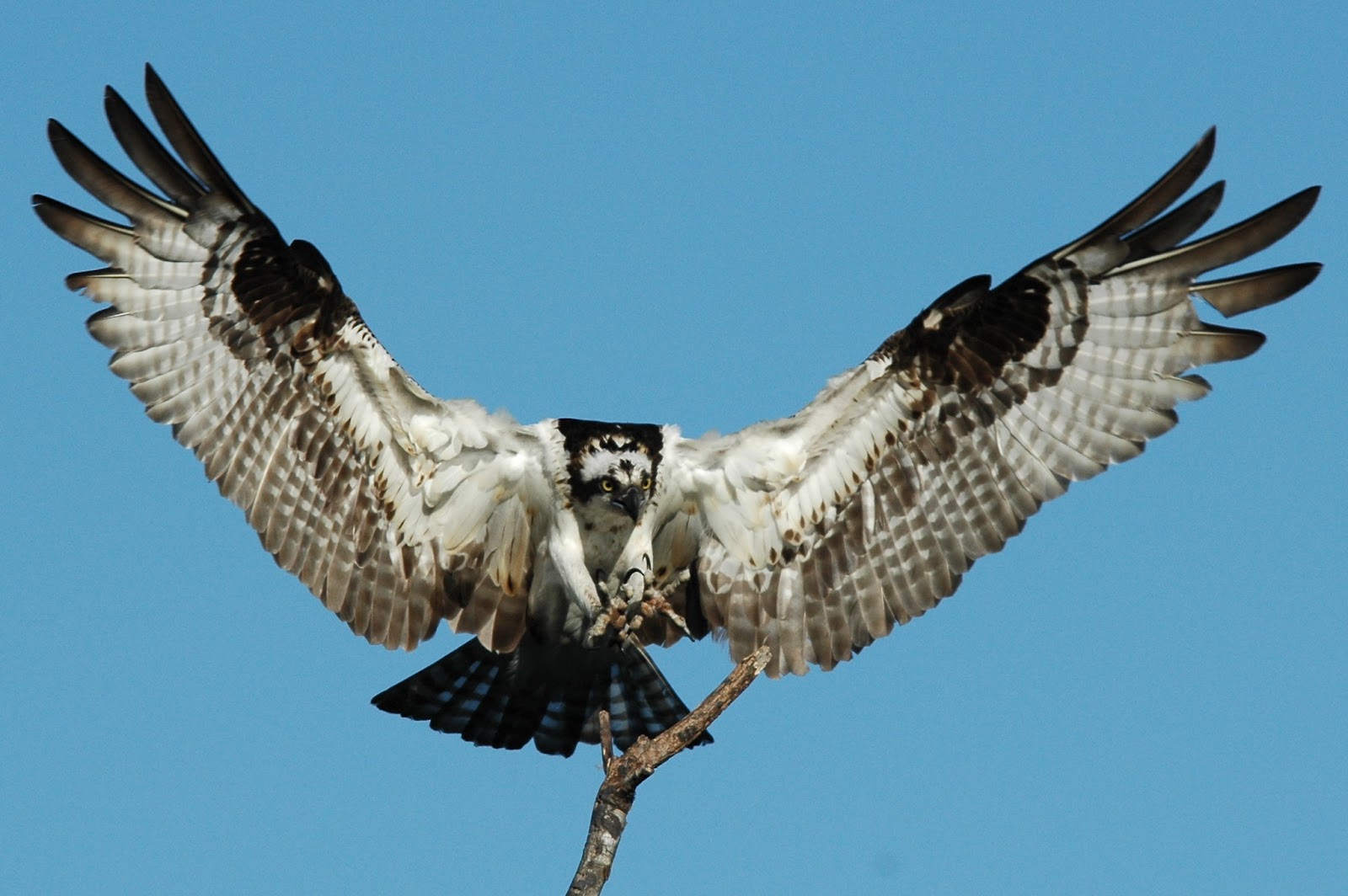
The Life of Animals | Osprey | The Osprey was one of the many types of Carl Linnaeus in his Century 18, Systema Naturae described and shown as Falco Haliaeetus. The genus, Pandion is the only member of the family Pandionidae, and contains the only species Osprey (P. haliaetus). The Pandion genus was described by the French zoologist Marie Jules César Savigny in 1809, and is taken from a greek mythical king Pandion. The Osprey differs in several respects from other raptors. To date, there have been two extinct species known from fossils. Pandion was homalopteron by Stuart L. Warter fossils found in 1976 appointed by the Middle Miocene, Barstovian age, in the marine deposits in the southern U.S. state of California.


Been recovered, a number of fossil claw from the sediments of the Pliocene and Pleistocene in Florida and South Carolina, USA. The earliest fossils recognized Pandionidae family were from the Oligocene Jebel Qatrani training, were recovered from the Fayum, Egypt. The subspecies are close enough in size to the nominate subspecies average 1.53 kg (3.4 lbs), carolinensis average pH of 1.7 kg (3.7 lb) and PH cristatus average of 1.25 kg (2 , £ 8). The upperparts are a deep, glossy brown, while the chest is white, sometimes streaked with brown, and underparts are pure white. The beak is black with a blue cere, and feet are white with blacks claws. A short tail and long, narrow wings with four long finger-like feathers, and a shorter fifth, give him a very special


The sexes look quite similar, but the adult male is distinguished from the female by its slimmer body and narrower wings. It is easy to determine the sex in a breeding pair, but harder with individual birds. The Osprey can be juvenile feathers of upperparts fringed buff, a fan of clay on the bottom strips are identified and feathers on the head. In flight, Ospreys have arched wings and drooping "hands", giving a seagull like appearance. The call is a series of whistling, as Cheep, Cheep or yewk described yewk. In North America you play from Alaska and Newfoundland south to the Gulf Coast and Florida, wintering further south, from the southern United States to Argentina.


There is a distance of 1000 km, in accordance with the coast of the Nullarbor Plain, between its breeding site in South Australia and western breeding area closest to the West in Western Australia. The Osprey breeds by freshwater lakes and coastal waters often brackish. The nest is a large pile of sticks, driftwood and seaweed in the forks of trees, rocks, light poles, platforms or artificial islands built off-shore Generally, Ospreys reach sexual maturity and reproduction begins around the age of three or four years, although some regions with high Osprey densities, such as Chesapeake Bay in the United States, can not start breeding as young as five to seven years, and may be a lack of adequate facilities to be great. If there are no nesting sites available, young Ospreys May forced to delay breeding. To alleviate this problem, the costs are sometimes built to provide more suitable sites for nesting.


The breeding season varies with latitude, spring (September-October) in southern Australia, from April to July in northern Australia in winter (June-August) in southern Queensland. The newly hatched chicks weigh only 50-60 grams (2 ounces), but Fledge within 8-10 weeks. A study on Kangaroo Iceland, South Australia had an average time between hatching and fledging of 69 days. The same study found an average of 0.66 young fledged per year and the occupied territories, and 0.92 years for young fledged per nest on. Approximately 22% of young survivors remained on the island, or back at the end of the term, to connect the breeding population.
 
The oldest European wild fish eagle on record lived to be over 30 years. In North America Bubo owls and bald eagles (eagles and possibly of similar size) are the only major predators of both nests and sub adults. However, kleptoparasitism of bald eagles, where the higher the raptor steals Osprey capture more prevalent than predation. Endoparasitic trematode (Scaphanocephalus expansus and Neodiplostomum spp.) They took into wild Ospreys


The Osprey has a wide scope, covering 9,670,000 km2 (3.7 million square miles) in just Africa and America, and has a large global population estimated at 460,000 individuals. In the late 19 and early 20 century were the main threats to Osprey populations of egg collectors and hunting of adults along with other raptors, but Osprey populations declined drastically in many areas in the years 1950 and 1960, this seemed to be partly due to the toxic effects of insecticides such as DDT playback. The pesticide interfere with calcium metabolism of the bird, which resulted in a thin shell, easily broken or unfertilized eggs. Nesting sites in South Australia on the Eyre Peninsula and Kangaroo Iceland are not vulnerable to unmanaged coastal recreation and Urban Development to intervene. The Osprey is the capital of the province of birds, both Nova Scotia, Canada and Södermanland, Sweden

Thứ Ba, 21 tháng 2, 2012

Kestrel


The Life of Animals | Kestrel | The name kestrel, (from French crécerelle, ie crécelle derivative from Ratchet) is given to Several different members of the falcon genus, Falco. Other Falcons are more adapted to active hunting on the wing.  Kestrels require a slight headwind in order to hover, Hence a local name of Windhover for Common Kestrel. Kestrels are bold and have adapted well to human encroachment, nesting in buildings and hunting by major roads.


Kestrels do not build nests Their Own, but use nests built by other species. Most species termed Kestrels Appear to form a distinct clade Among the Falcons, as suggested by comparison of mtDNA cytochrome b sequence data (Groombridge et al., 2002) and morphology.  The most basal "true" Kestrels are three species from Africa and its surroundings the which lack a malar stripe, and in one case have, like other Falcons true but unlike other large Kestrels areas of gray in their wings.


Approximately during the Gelasian (Late Pliocene or Early Pleistocene, around 2.5-2 mya), the main lineage of true Kestrels emerged; this contains the species characterized by a malar stripe.  More enigmatic is a group of 3 predominantly gray species from Africa and Madagascar.  The American Kestrel is the only New World species termed "kestrel".